
The Blob
Waiting for the seaweed apocalypse

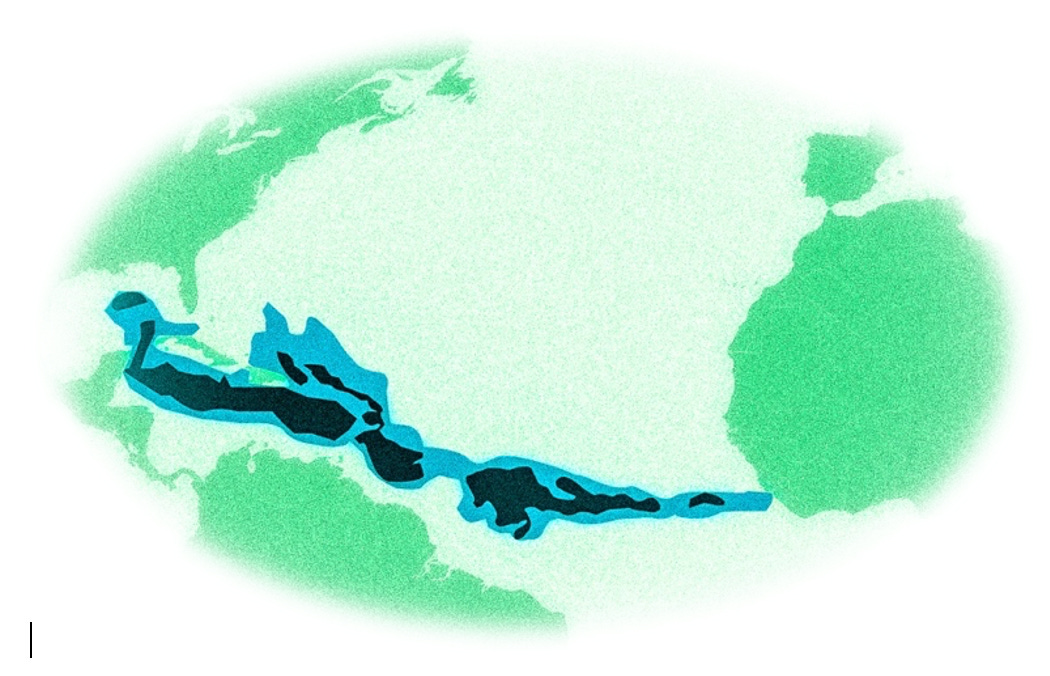
In late September of 1492 Christopher Columbus vented in his log book about being becalmed for two weeks in the middle of a vast mat of seaweed that stretched endlessly on all sides. Sargassum like this has been drifting into the Caribbean Basin forever. It's pushed across the Atlantic at a walk by trade winds and currents, but lately there has been more of it. A lot more. The annual blooms of this free-floating macroalgae have grown 100-fold since 2011. The theory is that warmer water and commercial fertilizers applied in the Congo and Amazon River basins are feeding it to an explosive degree. Even so, sargassum never made much news until three weeks ago, when an inspired headline writer warned of a giant blob of seaweed twice the width of the continental United States. A giant blob that's coming for us.
This is even worse than an asteroid. It's biblical. Some people believe that nothing on God's good Earth could be bigger than America, and if there was, it would be unimaginably bad. A giant blob ticks the box. The sci-fi form factor makes it creepy: amorphous, mindless, implacable. America isn't prepared for this kind of threat. You can't make a deal with a blob. You can't stop it at sea like a boatful of refugees. You can't set fire to it. Bomb it into smithereens and the smithereens just glob together again. Bullets have no effect at all, so our country's 20 million AR-15s are useless.
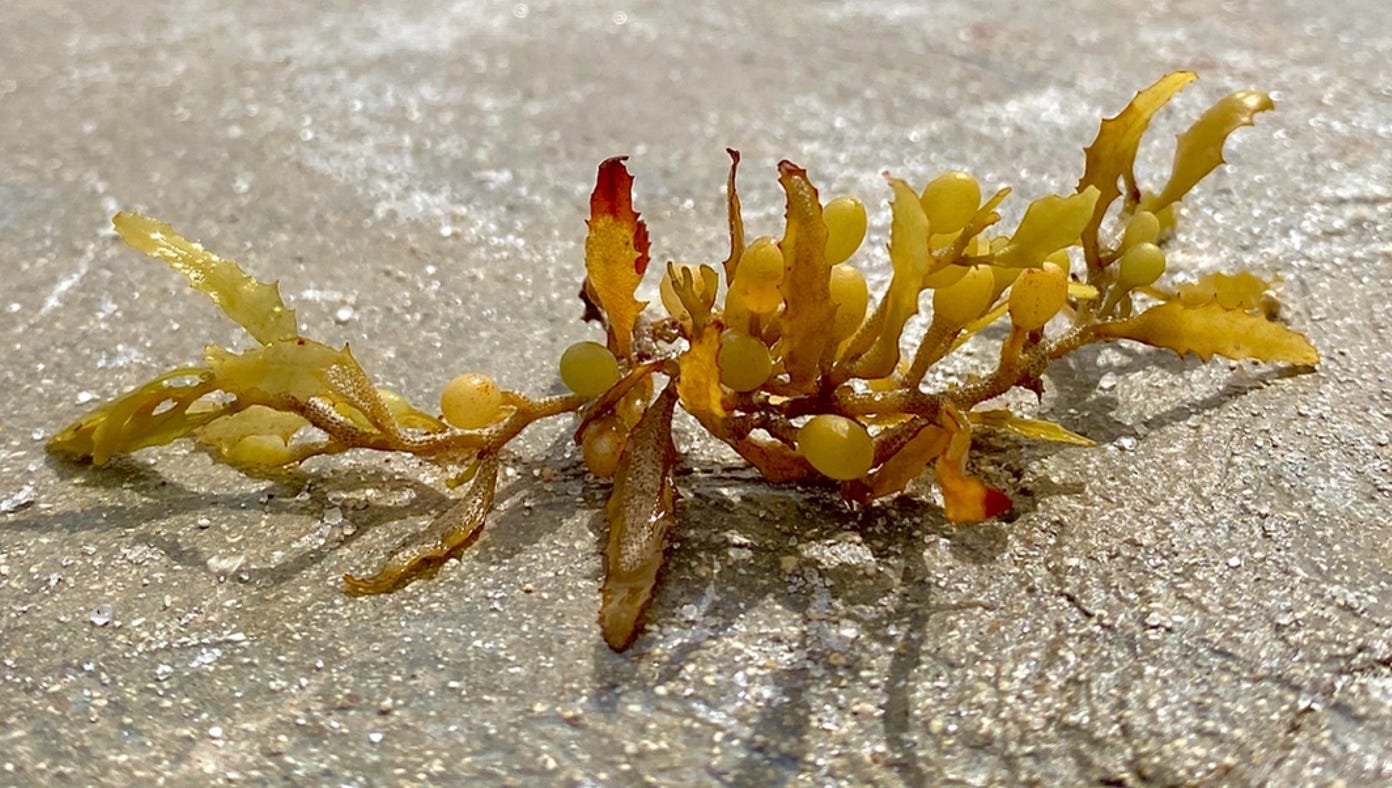
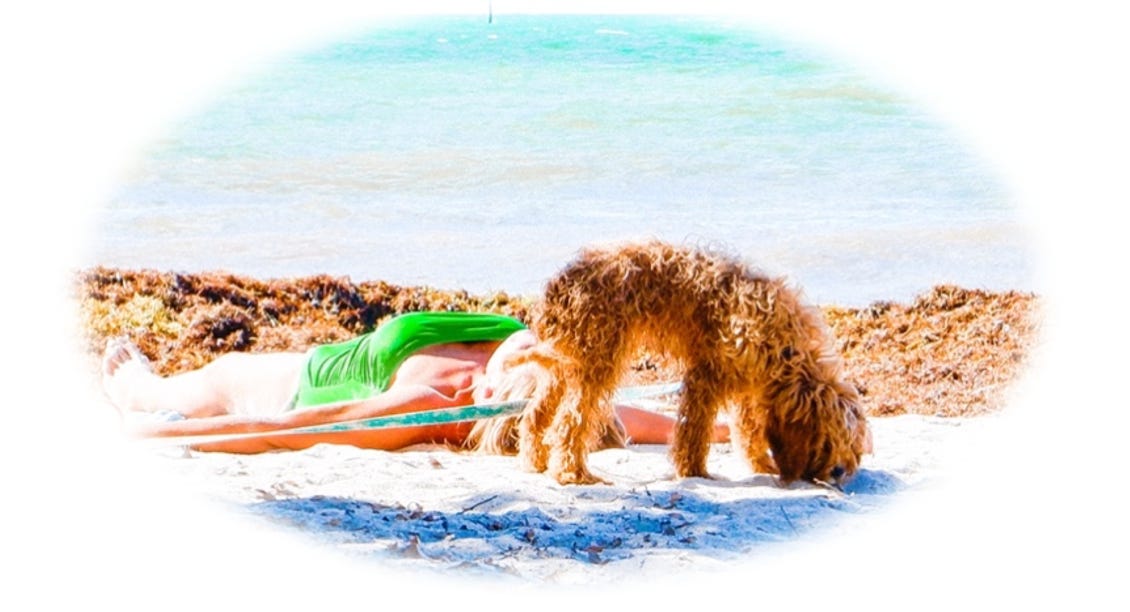
If a handful of fresh sargassum turned up in a salad, you wouldn't be alarmed until someone told you it contains arsenic. It's feathery, like straw-colored frisée studded with little berries. The berries are filled with air that keeps it afloat from Africa to the Gulf of Mexico. Swimming through a few handfuls is annoying; swimming through a mat of the stuff is a trial. Pushed into warm shallow water, the sargassum steeps into a brown tea. When it piles up on the shore it rots, turns black, and releases hydrogen sulfide gas, which smells. Tourists don't like any of these things, brides least of all. Nobody will ever forget your stinky wedding.
The sargassum is coming for Miami Beach. It's coming for the Keys and Cancún. It's coming for all the Happy Places, not counting Venezuela. The first to get blobbed will be the arc of islands from the Virgins down to Barbados and Trinidad. The solution for most of us Islands in the Path is to rake the seaweed out of the beaches and then truck it somewhere that tourists can't see it or smell it. This gets harder when the stuff is more than a foot deep, which is becoming the norm, and which the blob will surpass by a multiple, it is feared.
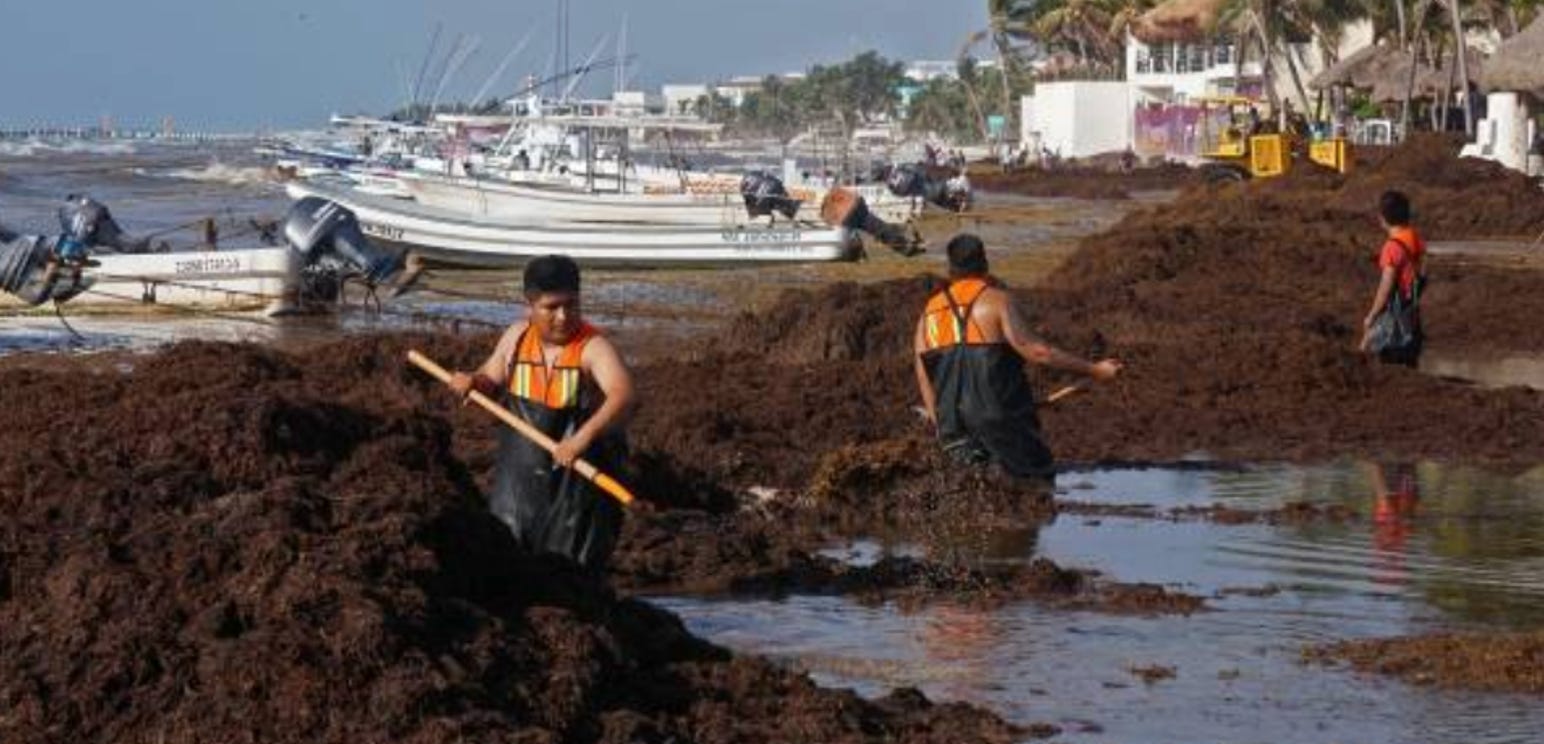
Playa del Carmen, near Cancun, Easter 2022. These seaweed workers are called Sargazeros.
Since one of our island city's strengths is short-term planning, the City Commissioners called in Chip Jones, Key West's contractor for beach raking, to brief them on his preparations for the blob. Commissioner Lopez from Bahama Village asked him if we could do something before the blob actually gets here, maybe grab it up somehow. Interdiction at sea turns out to be illegal, owing mostly to various juvenile and endangered critters who live in the seaweed or under it. This cowardly blob is using them as shields! But even if we could negotiate their release, we'd need a fleet of specialized seaweed-eating ships and all Jones's company has are tractors with rakes and some dump trucks.
Our own District IV Commissioner, Mary Lou Hoover, asked Jones if we could engineer some kind of barrier, like the Maeslantkering in the Netherlands, so the blob couldn't get to us and have to go bury someone else's island. This was a good question, although there aren't many organizations in the Keys that can engineer much more than a food truck. But, again, No. When sargassum encounters a barrier, it stacks up on itself until it can plop over.
Commissioner Kaufman, who is a lawyer, tried to trip up the witness with a question about sea turtles. The loggerheads and green sea turtles start nesting in May, and nobody wants to hear about contractors in tractors raking up baby sea turtles making their first break for the sea. So glad you asked, Jones has a protocol in place. He's the kind of guy you'd guy you'd pick to land a disabled airliner, deal with a plunging asteroid or lead the invasion of Cuba next time, and he's got the turtles covered. Volunteer turtle friends will be square-searching our beaches every morning an hour before sunrise to make sure that all the babies are clear.
In general, we're used to migratory behavior. We're on the flyway for a hundred varieties of raptors, butterflies, fish, turtles, controlled substances and refugees. Why not rogue vegetable migrations, too? Sargassum is no stranger. It's what summer smells like at latitude 24º. We're getting more of what we've always had. And, by August, we may have something that we've never had – mountains.
Chris, your writing is always entertaining even when the topic is alarming.